
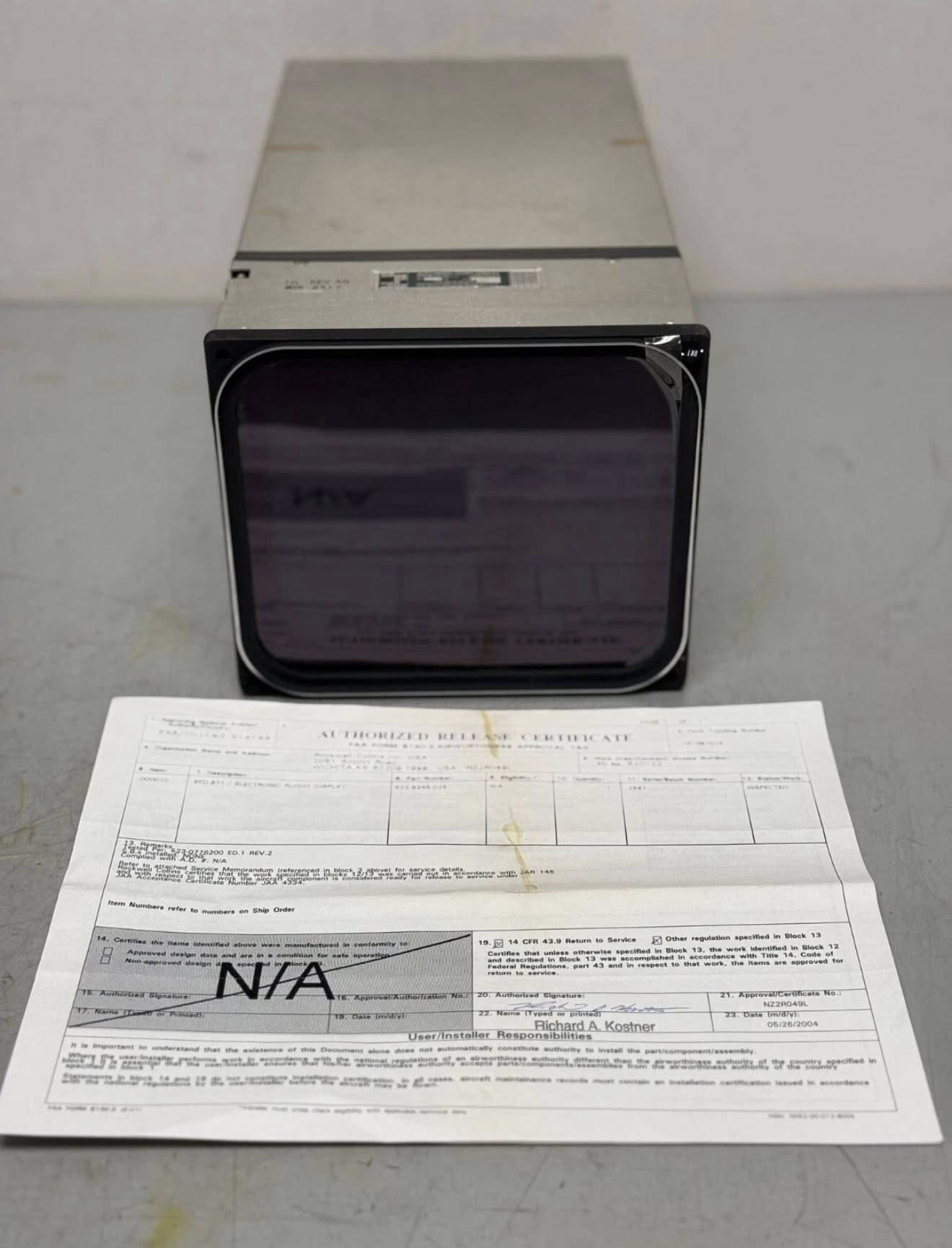
Understanding the Rockwell Collins EFD-871 Electronic Flight Display (622-9345-025)
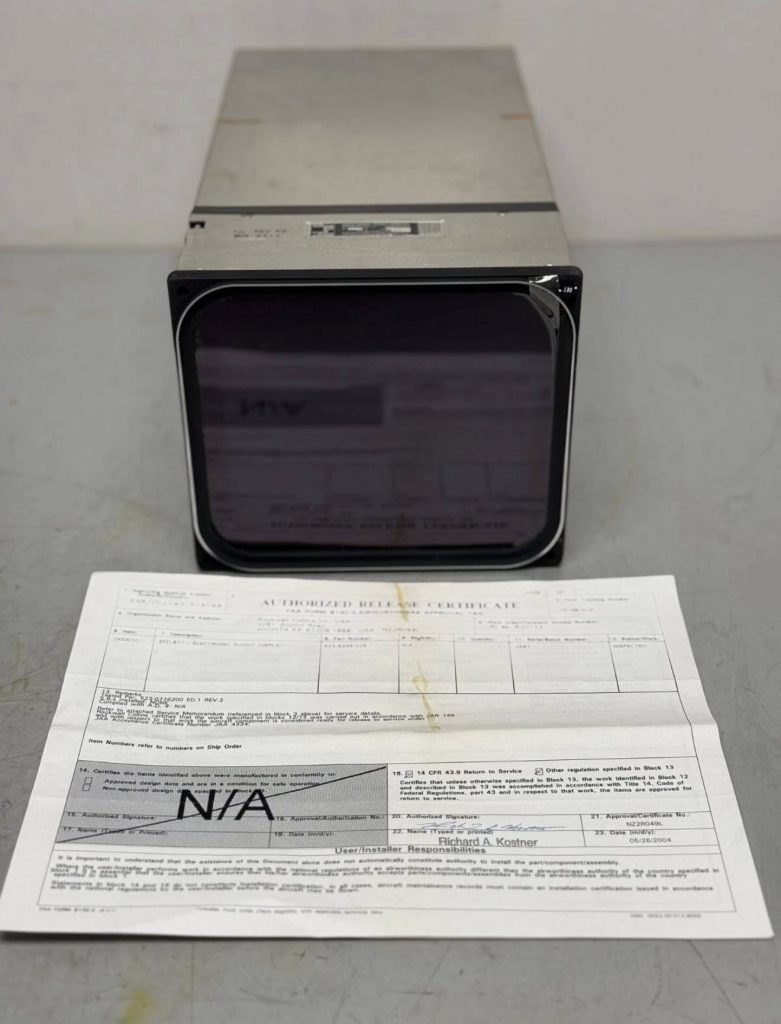
Electronic Flight Display. Modern aviation relies heavily on electronic instrumentation to enhance safety, reduce pilot workload, and improve situational awareness. Among the many systems that have transformed today’s flight decks is the Electronic Flight Display (EFD). The EFD-871 Electronic Flight Display (Manufacturer Part Number: 622-9345-025), developed by Rockwell Collins, represents a generation of avionics technology designed to present critical flight data in a clear, consolidated digital format.
This article explores what an electronic flight display is, how systems like the EFD-871 function within an aircraft, and why such equipment plays an important role in contemporary aviation.
Electronic Flight Display
The Evolution from Analog to Digital Flight Displays
For decades, aircraft cockpits were dominated by individual analog gauges—often referred to as “steam gauges.” These mechanical instruments displayed airspeed, altitude, attitude, heading, and vertical speed using independent dials. While effective, analog systems required pilots to scan multiple instruments continuously, interpret individual readings, and mentally integrate the information into a coherent understanding of the aircraft’s performance.
The transition to electronic flight displays marked a significant advancement. Instead of separate mechanical instruments, digital displays consolidate data into a single or multi-screen interface. This shift has provided several operational advantages:
- Reduced pilot workload
- Improved readability
- Enhanced situational awareness
- Greater system integration
The EFD-871 belongs to this digital generation, serving as a display unit that integrates and presents flight data in an organized and intuitive manner.
Electronic Flight Display
What Is an Electronic Flight Display?
An Electronic Flight Display (EFD) is a digital screen that presents essential flight information received from onboard sensors and avionics systems. These displays are typically part of an integrated avionics suite and may function as a Primary Flight Display (PFD), Multi-Function Display (MFD), or supporting display depending on aircraft configuration.
While exact configurations vary by installation, electronic flight displays commonly present:
- Attitude information (pitch and bank)
- Airspeed and altitude
- Vertical speed
- Heading and navigation data
- System status indications
The EFD-871 is designed to serve within compatible aircraft systems to present critical flight parameters clearly and reliably.
Electronic Flight Display
Core Components Behind an Electronic Flight Display
Although pilots see only the display screen, several interconnected components work behind the scenes to deliver accurate information:
1. Air Data System
Sensors measure static and dynamic air pressure to determine airspeed, altitude, and vertical speed.
2. Attitude and Heading Reference System (AHRS)
This system calculates aircraft orientation (pitch, roll, and yaw) using gyroscopic and accelerometer data.
3. Navigation Systems
Inputs from navigation radios, GPS units, or flight management systems are displayed to assist with route tracking and instrument procedures.
4. Processing Unit
The display’s internal processor organizes incoming data and renders it in a readable graphical format.
The EFD-871 functions as the visual interface in this chain, translating raw data into pilot-friendly information.
Electronic Flight Display
Human Factors and Cockpit Design
One of the major reasons for adopting electronic flight displays is human factors engineering. Aviation safety research has shown that pilot workload and information management are critical factors in maintaining safe operations.
Electronic displays improve cockpit ergonomics by:
- Placing primary flight information in a centralized location
- Using color coding to differentiate alerts or conditions
- Providing consistent layouts that reduce interpretation errors
- Minimizing unnecessary instrument scanning
The EFD-871 is part of this design philosophy, contributing to streamlined cockpit workflows and improved information processing during high-demand flight phases such as takeoff, approach, and instrument meteorological conditions.
Reliability and Certification Standards
Avionics equipment installed in certified aircraft must meet stringent regulatory and environmental standards. These standards address factors such as:
- Temperature tolerance
- Vibration resistance
- Electromagnetic interference protection
- Power supply stability
- Long-term operational durability
The EFD-871, as a certified avionics component from Rockwell Collins, is engineered to comply with applicable aviation certification requirements. This ensures that the display maintains accuracy and functionality in varied operational conditions.
Integration Within Avionics Architectures
Modern aircraft systems are interconnected. Electronic flight displays do not operate independently; they receive and share data with multiple onboard systems.
The EFD-871 integrates within compatible avionics architectures to:
- Receive sensor data
- Display navigation and flight guidance information
- Interface with autopilot systems
- Present system alerts or advisories
Integration reduces redundancy in hardware and enhances consistency across cockpit displays. If multiple screens are installed, they often share synchronized information, contributing to a cohesive operational environment.
The Importance of Manufacturer Part Numbers
In aviation, precision in component identification is essential. The manufacturer part number 622-9345-025 serves several important purposes:
- Ensures correct configuration compatibility
- Supports maintenance documentation
- Assists in inventory management
- Maintains regulatory compliance
Aircraft maintenance professionals rely on part numbers to confirm that installed equipment matches approved technical documentation. Using the correct part number ensures that the system continues to meet certification requirements and performance standards.
Maintenance Considerations for Electronic Flight Displays
While electronic displays reduce mechanical wear compared to traditional analog instruments, they still require proper maintenance and inspection.
Maintenance considerations typically include:
- Verifying display clarity and brightness
- Checking data accuracy during system tests
- Inspecting connectors and wiring
- Confirming proper system integration
Electronic components must also be protected from moisture, electrical surges, and improper handling during installation. Following manufacturer and regulatory guidelines ensures long-term reliability.
Operational Benefits in Instrument Flight
Electronic flight displays play a particularly significant role in instrument flight operations. When flying without outside visual references, pilots depend entirely on instrument data to maintain aircraft control and navigate safely.
The consolidated layout of displays like the EFD-871 provides:
- Immediate visibility of attitude information
- Simplified cross-checking of altitude and airspeed
- Integrated navigation cues
- Clear presentation of vertical guidance
By organizing this information cohesively, electronic displays help reduce the risk of spatial disorientation and instrument misinterpretation.
Training and Familiarization
Transitioning from analog instrumentation to electronic displays requires proper training. While digital systems simplify information presentation, pilots must understand:
- System logic and data sources
- Display symbology
- Failure modes and backup procedures
- Reversionary display configurations
Training ensures pilots can effectively interpret and respond to information provided by the EFD-871 and similar systems.
Technological Significance in Modern Aviation
The development of electronic flight displays represents a broader shift toward digital integration in aviation. From advanced autopilot systems to satellite-based navigation, the modern cockpit relies on interconnected electronic systems.
Displays such as the EFD-871 reflect this progression by:
- Serving as central information hubs
- Supporting integrated flight guidance
- Enhancing situational awareness
- Aligning with evolving avionics architectures
As aviation technology continues to advance, digital display systems remain foundational to safe and efficient aircraft operation.
Warranty and Quality Assurance
A 30-day warranty accompanying the EFD-871 provides assurance that the unit meets operational expectations upon installation. In aviation, even replacement components must undergo verification to confirm functionality and compatibility.
Warranty coverage typically allows operators to:
- Confirm proper system integration
- Validate display performance
- Address potential defects
This process supports quality assurance while maintaining operational continuity.
Conclusion
The Rockwell Collins EFD-871 Electronic Flight Display (622-9345-025) exemplifies the evolution of cockpit instrumentation from mechanical gauges to integrated digital systems. By presenting essential flight information in a centralized, clear, and reliable format, electronic flight displays contribute significantly to aviation safety and operational efficiency.
Beyond its role as a hardware component, the EFD-871 represents a broader technological shift toward enhanced situational awareness, improved human factors design, and interconnected avionics architectures. Understanding how such systems function—and how they fit within the overall aircraft ecosystem—provides valuable insight into the sophistication and safety of modern aviation.



No comment