
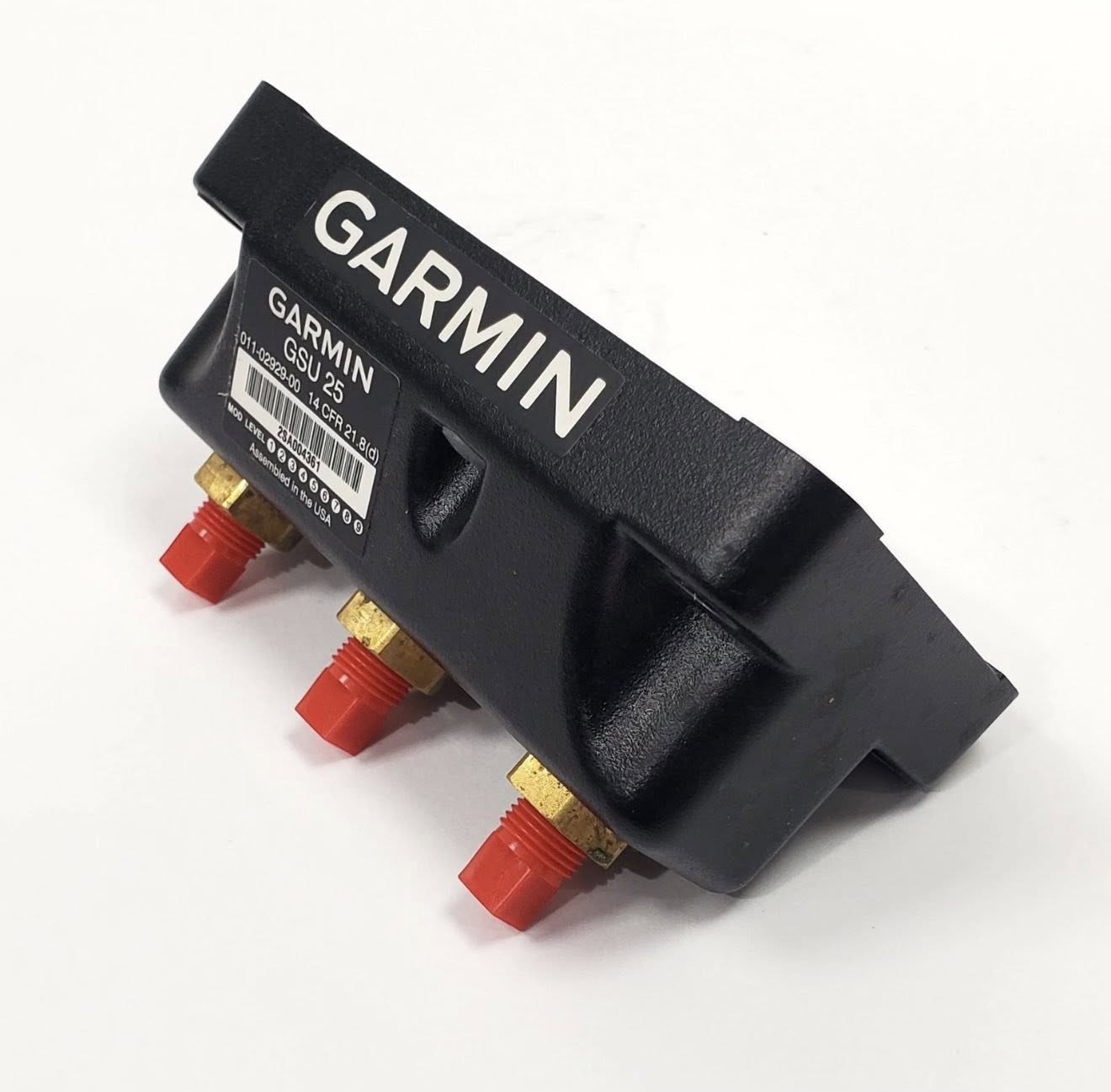
Overview of the Garmin GSU 25 Air Data Unit
Garmin GSU 25.The Garmin GSU 25 Air Data Unit is a core avionics component designed to supply precise air data information to compatible Garmin integrated flight display systems. Identified by Part Number 011-02929-00, the GSU 25 plays a critical behind-the-scenes role in modern glass cockpit architectures by converting raw pressure inputs into accurate, usable flight data.
Rather than functioning as a display itself, the GSU 25 operates as a processing module that supports the accuracy and reliability of primary flight information presented to the pilot.
Garmin GSU 25
Role of an Air Data Unit in Modern Avionics
An air data unit (ADU) is responsible for processing pressure inputs from the aircraft’s pitot and static systems. These inputs are essential for determining several primary flight parameters, including:
- Indicated airspeed
- Altitude
- Vertical speed
In traditional analog aircraft, these values were calculated mechanically within individual instruments. In modern digital cockpits, the air data unit centralizes this processing and transmits computed data to electronic flight displays.
The GSU 25 fulfills this role within Garmin avionics ecosystems, acting as a dedicated and highly precise air data processor.
Garmin GSU 25
Integration Within Garmin Glass Cockpit Systems
The GSU 25 is designed to integrate with compatible Garmin display systems, where it supplies continuous air data information to:
- Primary Flight Displays (PFDs)
- Multi-Function Displays (MFDs)
- Integrated avionics networks
By separating data processing from data presentation, Garmin’s system architecture improves redundancy, accuracy, and overall system reliability.
Garmin GSU 25
Data Accuracy and Flight Safety
Accurate air data is fundamental to safe aircraft operation. Airspeed, altitude, and vertical speed influence nearly every phase of flight, including:
- Takeoff and climb performance
- Cruise efficiency
- Approach stability
- Landing safety
An air data unit like the GSU 25 continuously samples pressure inputs and applies calibration algorithms to deliver stable and reliable values. This accuracy supports pilot decision-making and ensures that displayed flight data aligns with aircraft performance expectations.
Garmin GSU 25
System Redundancy and Architecture Benefits
The GSU 25 exemplifies this modular approach.
Key benefits include:
- Centralized air data processing
- Reduced mechanical complexity
- Improved long-term reliability
- Easier system troubleshooting
By housing air data calculations in a dedicated unit, Garmin avionics systems can maintain consistency across multiple displays and support advanced monitoring and alerting functions.
Garmin GSU 25
Installation and Compatibility Considerations
Installation considerations typically include:
- Proper pitot and static line connections
- Secure mounting location
- Electrical and data bus integration
- System configuration and calibration
Maintenance and Operational Context
This unit is described as being in good used condition and was reportedly operational at the time it was removed from service. In avionics maintenance practice, components removed from aircraft are commonly reused after appropriate inspection and testing.
Maintenance evaluation typically focuses on:
- Physical condition of the housing and connectors
- Signs of moisture intrusion or corrosion
- Proper pressure port integrity
- Functional verification after installation
Warranty and Inspection Assurance
A 30-day return period is offered, allowing time for inspection and functional verification after installation. In aviation environments, this period is typically used to:
- Confirm accurate airspeed and altitude readings
- Validate vertical speed performance
- Ensure compatibility with connected displays
- Complete required documentation
Importance of Correct Part Identification
The manufacturer part number 011-02929-00 is essential for ensuring system compatibility. In avionics systems, even minor part number differences can indicate variations in hardware configuration or software compatibility.
Correct part identification supports:
- Regulatory compliance
- Maintenance record accuracy
- Approved system configurations
- Long-term fleet consistency
Maintenance professionals rely on precise part numbers to ensure that installed components meet aircraft and system approval requirements.
Contribution to Digital Flight Instrumentation
The GSU 25 is an example of how modern avionics distribute responsibilities across specialized modules. Rather than relying on standalone instruments, today’s aircraft increasingly depend on interconnected processors that share data across the flight deck.
This design philosophy supports:
- Cleaner cockpit layouts
- Improved data consistency
- Enhanced system monitoring
- Easier upgrades and replacements
Air data units like the GSU 25 are foundational to this architecture, even though they remain largely invisible to the pilot during normal operations.
Conclusion
The Garmin GSU 25 Air Data Unit (P/N 011-02929-00) is a vital component within Garmin’s integrated avionics systems, responsible for converting pitot and static pressure inputs into accurate digital air data. While not a display or pilot-facing interface, its role is essential to the accuracy of airspeed, altitude, and vertical speed information presented in the cockpit.
Understanding how air data units function—and how they integrate with modern glass cockpit systems—highlights the importance of behind-the-scenes avionics components in supporting safe, reliable, and efficient aircraft operations.




No comment